
Understanding the Compass Concept
So, we have "the motor." The speed at which people function and the energy levels they naturally tend to have in "default mode" as they go through life day-to-day.
The second major concept William Marston defined is what we now call the “compass”. Just like the word implies, it is the way each person is naturally oriented. Think of it as the preference a peson has to either focus first on tasks and getting things done, or to focus first on people and building relationships.
Perhaps you have seen some people act from one far end of the compass spectrum and they are almost always focusing on work, or getting things done. They don't socialize much. They don't share much about their personal life, even when asked. They just go about getting things done and may only think about connecting with others and building relationships as an afterthought.
Other people are at the far other end of the spectrum and can almost always be seen meeting and greeting, connecting to and building relationships with others, perhaps even forgetting that there is anything to be done at all!
It would look something like this graphic:
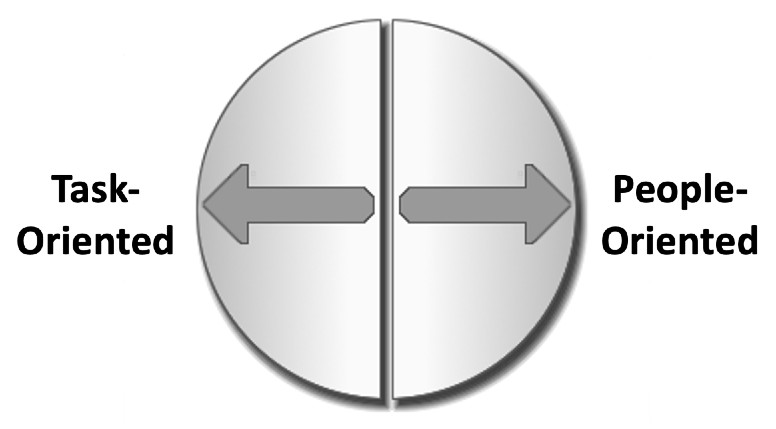
That’s the compass. And, yes, it is as simple as the motor. There is nothing more complicated to the compass than understanding and recognizing whether a person is more naturally oriented toward tasks or people.
But, as I mentioned in the lesson about the motor, when we combine these two major concepts we can start getting some very powerful and useful tools to use in our interactions with others. More on that in a bit.
Please note that it does not matter where you see yourself on the spectrum Just like the motor spectrum, neither end of the compass spectrum is right or wrong. Neither is better or worse than the other. You might very well know people who frustrate you because it seems like all they ever do is act from one extreme end of the spectrum and they aren't acting like you want them to act.
They may never do anything to show they care about you, or do anything to build the relationship with you. Or, it may seem like they never actually do anything because they are always so caught up in talking with people.
But, please note - and this is really important - a person being at the extreme end of either continuum is not right or wrong. It is part of who they are. This does not mean you just have to live with it and allow them to always be socializing and never doing anything. It means you can respect them for who they are and work with them from their point of view.
But, I am getting ahead of myself. We'll go into this more in future lessons. Right now, you're ready to take the quiz for this lesson.
Take a moment and answer this simple question and then move on to the next lesson.